In nature, ants are a vivid example of highly organized social life. A colony functions as a “superorganism,” in which each individual performs a specialized role that serves the collective. Worker ants tirelessly search for and transport food, soldier ants bravely defend against intruders, and the queen focuses on reproduction to maintain the colony’s lineage. This coordination relies not only on strict division of labor but also on a complex pheromone communication system, a chemical signaling network that preserves order and efficiency throughout the nest. Through this seamless synchronization, the colony thrives as a unified whole, achieving far more than any single ant could alone.
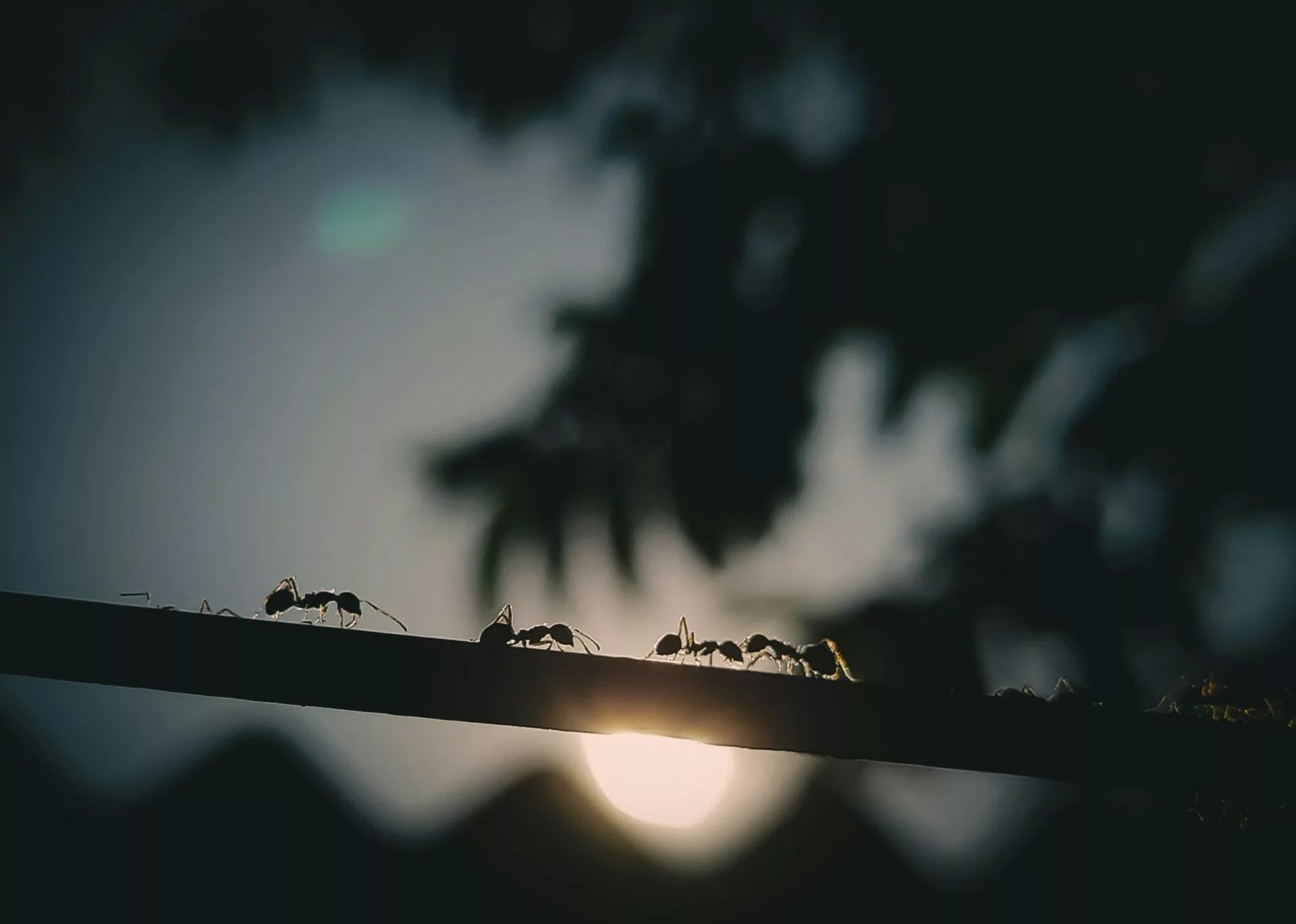
Biologist Edward Osborne Wilson (1929–2021), the founder of sociobiology, devoted much of his research to explaining the mechanisms behind this remarkable complexity. One of his most striking discoveries was the phenomenon of biological altruism, when an individual sacrifices its own well-being, even its life, to protect the group. In some carpenter ant species such as Camponotus saundersi, soldier ants possess a unique defense mechanism: when attacked, they can contract their abdominal muscles so forcefully that their internal toxin glands rupture, releasing a sticky, immobilizing substance that traps enemies. The act is fatal for the ant itself, but it secures the safety of the colony, especially the queen and larvae, ensuring the survival and continuation of their shared genetic line.
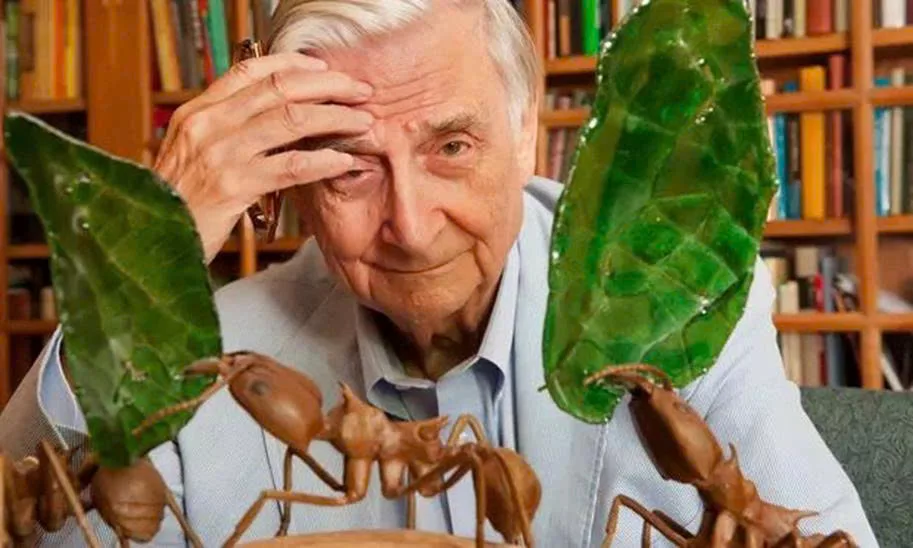
Edward Osborne Wilson
Wilson explained this apparent paradox through the concept of kin selection, a principle stating that altruistic behavior can evolve because it enhances the survival of shared genes within a population. In other words, self-sacrifice benefits the evolutionary success of related individuals, making altruism not a contradiction but a strategic adaptation. It is this very mechanism that has allowed ants to develop stable, enduring societies over millions of years of evolution.
From the story of the ant colony, Wilson invites us to see altruism in a broader frame. Altruism is not merely a moral ideal within human society, it is, first and foremost, a biological phenomenon deeply rooted in evolution. Cooperation and sacrifice for the collective are not only fundamental to the survival of ants but have also shaped the social development of humankind. Today, that principle echoes in human acts of generosity, organ donation, rescue efforts, or volunteer service, all manifestations of our instinct to sustain collective good.
Thus, altruism bridges biology and humanity, standing as one of the driving forces behind social progress and sustainable development. By looking into the small yet astonishing world of ants, we are reminded that true strength lies not in individual effort but in unity and selflessness. Nature’s lesson is timeless: a society can only endure when its members place the greater good above the self, building together a world founded on compassion and resilience.
(Source: Internet)